

Mauricio Pochettino has agreed a two-and-a-half year deal to become Manchester United manager following Michael Carrick’s sacking, so what can supporters actually expect on the pitch?
The 54-year-old, who led the United States to the last 16 of the World Cup in his most recent role, is set to return to England after previous spells in charge of Southampton, Spurs and Chelsea.
Starting with his Southampton tenure, and including his 18-month spell as Paris Saint-Germain head coach, we look at how he has set his team up in each role – and ponder what he might do at United.
Tactical blueprint at Southampton?
A 4-2-3-1 formation quickly became established as Pochettino’s favoured choice at Southampton, where he maintained a similar shape to his predecessor Nigel Adkins but with a dramatically different playing style emphasising pressing high up the pitch.
In terms of personnel, his line-up stayed largely consistent, with Dejan Lovren and Victor Wanyama the only major signings to become starters during his season-and-a-half long spell in charge.
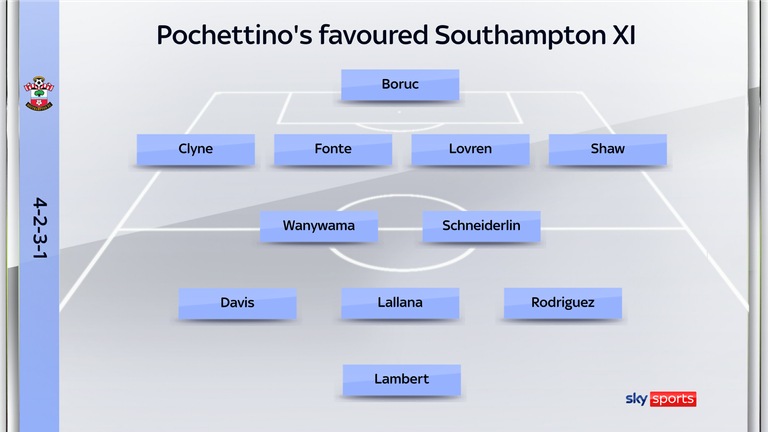
Instead, Pochettino showed his ability to improve the players he already had, with Adam Lallana, Morgan Schneiderlin, Jay Rodriguez, Luke Shaw and Nathanial Clyne among those who flourished – albeit once they had adapted to Pochettino’s demands.
“When I started at Southampton, I very much played off the left, No 10; almost a luxury-type player,” reflected Lallana later in his career. “When Pochettino came in, it was very apparent from day one there would be no luxury player in his team.”
Youthful dynamism at Spurs
Pochettino adopted the same approach at Spurs, where his side, like his Southampton side, soon became identifiable by their aggression and intensity out of possession, as well as quick, vertical passing moves to facilitate fast-paced attacks.
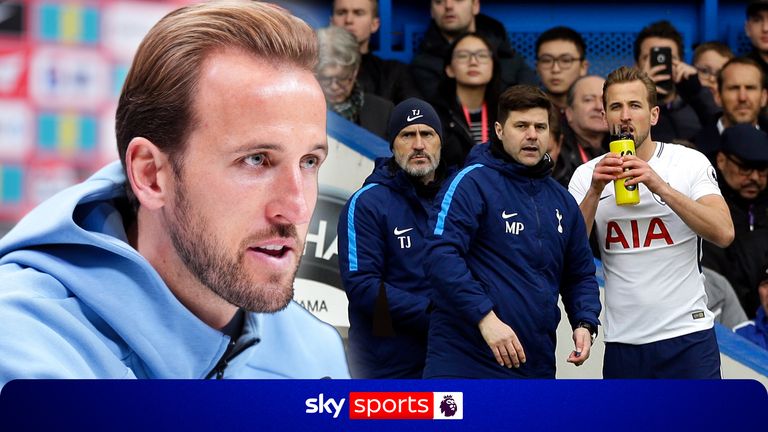
Harry Kane praises his former boss Mauricio Pochettino
Again, he predominantly used a 4-2-3-1 formation. And again, he helped a large contingent of young players flourish, including Dele Alli and Harry Kane, who combined to devastating effect as Pochettino’s No 10 and and No 9 respectively.
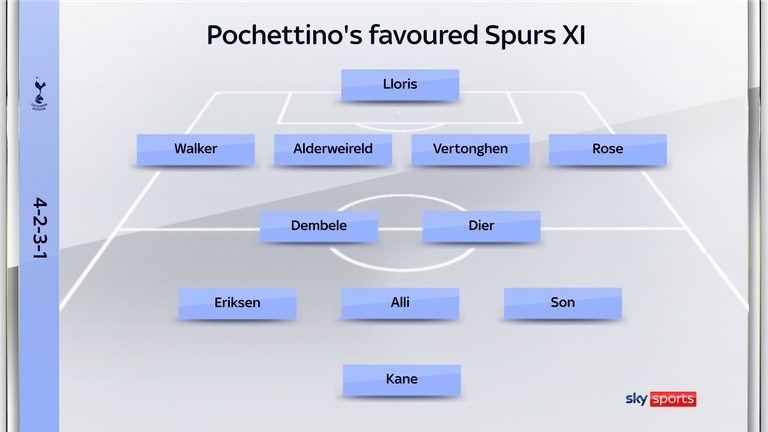
Pochettino used his full-backs to provide attacking width, with a central midfielder, usually Eric Dier, encouraged to drop back and form a back three in possession. This in turn allowed Alli, Christian Eriksen and Heung-Min Son to play in close proximity to Kane.
Pochettino used those young players to transform Spurs, reaching a Champions League final and achieving three consecutive top-three Premier League finishes. But the age profile of the team changed as time wore on.
As the team got older, legs became heavier, and adequate replacements failed to arrive from the transfer market, Spurs struggled to sustain their intensity. Pochettino’s departure in 2019, five years after his appointment, confirmed the end of a cycle.
Adapting at PSG
Pochettino returned to management over a year after leaving Spurs when took over at Paris-Saint Germain, where his tenure was a story of adapting his philosophy to the characteristics of his players.
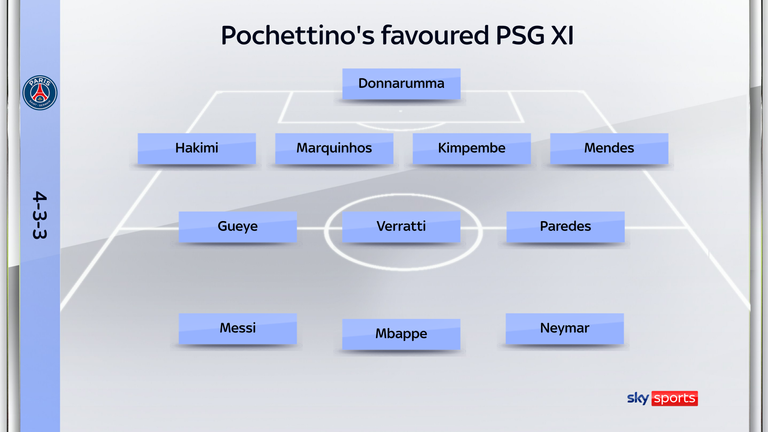
To accommodate Lionel Messi, Kylian Mbappe and Neymar, Pochettino moved away from the high-pressing tactics that had defined his earlier roles, knowing his superstar front three were not predisposed to such a demanding off-the-ball approach.
A 4-3-3 formation was his most used system, again with attacking full-backs in Achraf Hakimi and Nuno Mendes. But the circumstances meant his PSG side were far removed from his favoured style.
Reverting to 4-2-3-1 at Chelsea
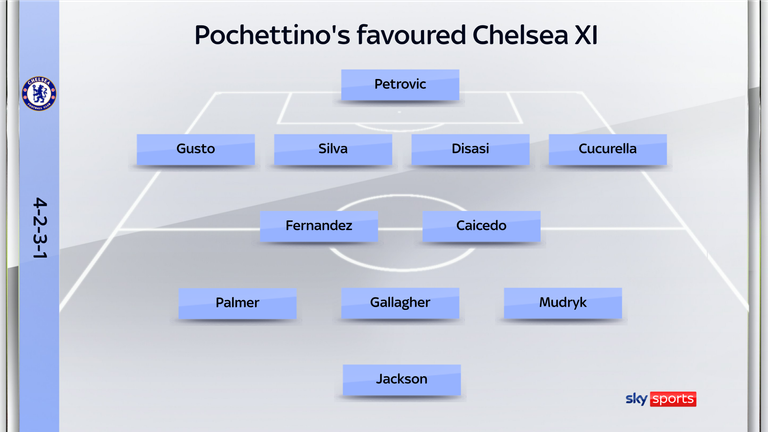
Pochettino used a 3-4-2-1 formation in some of his early games in charge of Chelsea following his appointment in 2023. Soon, though, he switched to his favoured 4-2-3-1.
Cole Palmer followed in the footsteps of previous attackers to have flourished under Pochettino, such as Alli and Kane, with 22 goals and 11 assists in a stunning Premier League campaign.
But overall Pochettino found it difficult to transmit his ideas.
In April of his only season at Stamford Bridge, he questioned the group’s mentality and work-rate. “We still need to create this mentality that is going to help us,” he said. “You need to demand more from yourself and your team-mates.”
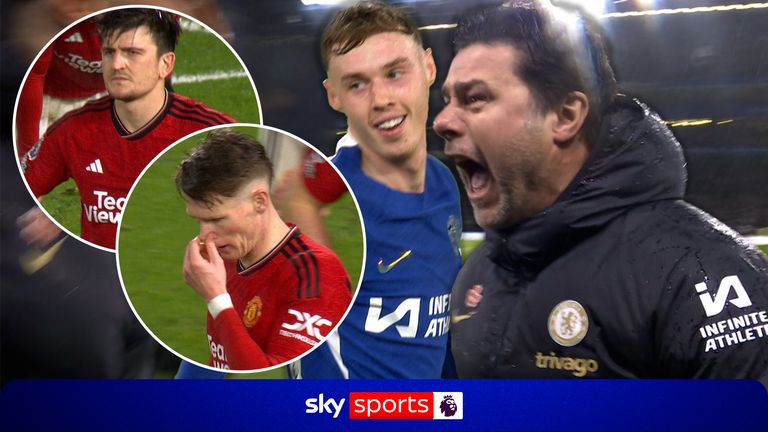
Chelsea won a seven-goal thriller in Mauricio Pochettino’s last game against Man Utd
Pochettino’s Spurs side consistently ranked among the Premier League’s top sides in terms of distance covered but Chelsea finished the 2023/24 season with the third-lowest total in the division.
Flexibility with USA
Pochettino continued to adapt with the USA national team, switching between a back three and back four and moving away from the more rigid positional game implemented earlier in his career.
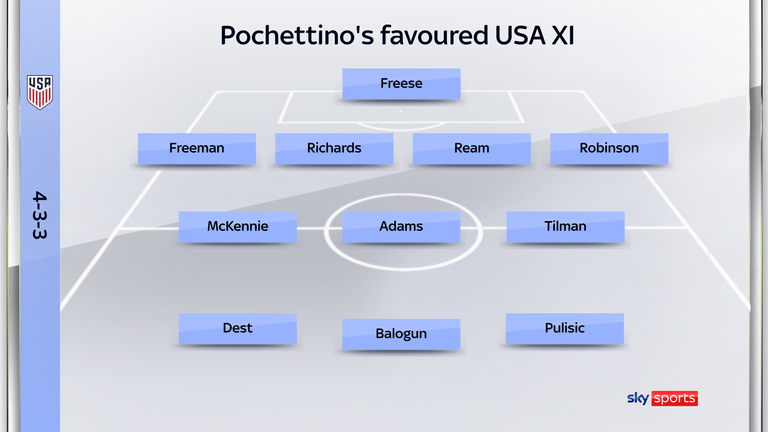
His most used formation at the World Cup was a 4-3-3 but his attacking players were encouraged to be fluid and rotate positions, an approach which helped them overpower Paraguay, Australia and Bosnia and Herzegovina before their elimination by Belgium.
Sky Sports’ Nick Wright looks at the five things Mauricio Pochettino will have to address if and when he replaces Michael Carrick at Man Utd
Pochettino was also commended for getting the team to pull together as a collective, with pressing becoming central to their approach out of possession during their World Cup run.
What will it look like at Man Utd?
Pochettino’s team at Manchester United is likely to look similar, at least initially, to that of Carrick, who also favoured a 4-2-3-1 formation – albeit with a few potential adjustments.
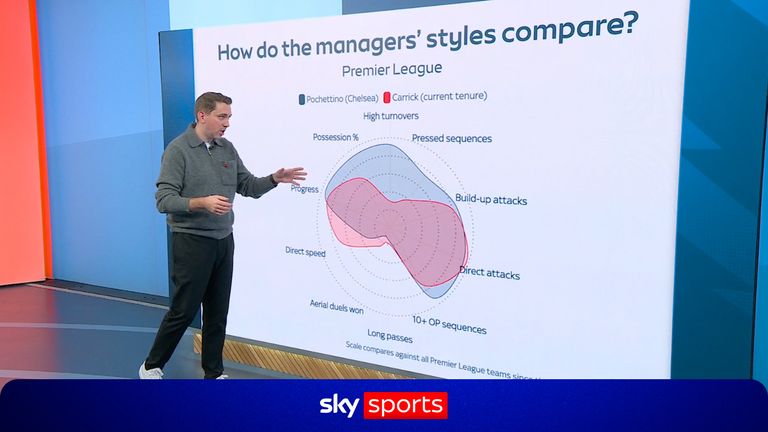
Sky Sports’ Dave Reed compares Michael Carrick’s playing style at Manchester United to Mauricio Pochettino’s time at Chelsea
Leny Yoro’s recovery speed could be needed at centre-back if he is to play a high line, while the athleticism of Patrick Dorgu could be preferable to the experience of a 31-year-old Shaw. Carlos Baleba is likely to be key in midfield given his physical prowess.
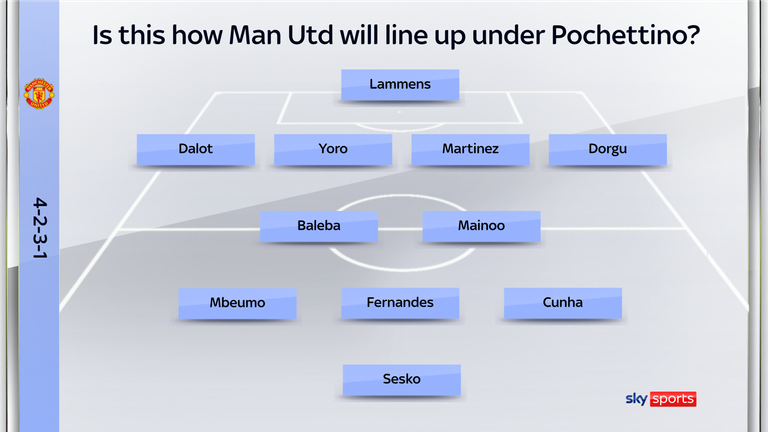
But Pochettino may also have to accept, as in some of his previous roles, that he can’t demand a ferociously high-intensity approach given the players he will have at his disposal.
The Argentine typically favours young players but United have one of the oldest starting line-ups in the Premier League this season. Could Shea Lacey provide an injection of youthful energy?
Bruno Fernandes will doubtless be vital in the No 10 role but does he have the energy, at 32, to run beyond his striker in the style of a young Alli with Kane at Spurs?
Can a team that ranks 19th in the division for distance covered this season achieve the level of intensity Pochettino craves?
In possession, Pochettino may seek to develop United’s threat from direct attacks and counters, in the style of his Spurs and Chelsea sides. But he will have his work cut out to transform their pressing.
It adds to the intrigue about what might lie ahead. Pochettino feels he has evolved. “If you don’t change, you die,” he said recently. That attitude will likely be needed at United, where he inherits a very different squad from the one he had in his best years at Spurs.


Leave a Reply