

An attempt to save NASA’s $500 million Neil Gehrels Swift Observatory from dropping out of orbit fell short, but the behind-the-scenes machinations required just to make a rescue possible deserve recognition, government and commercial space officials said in a recounting of the mission.
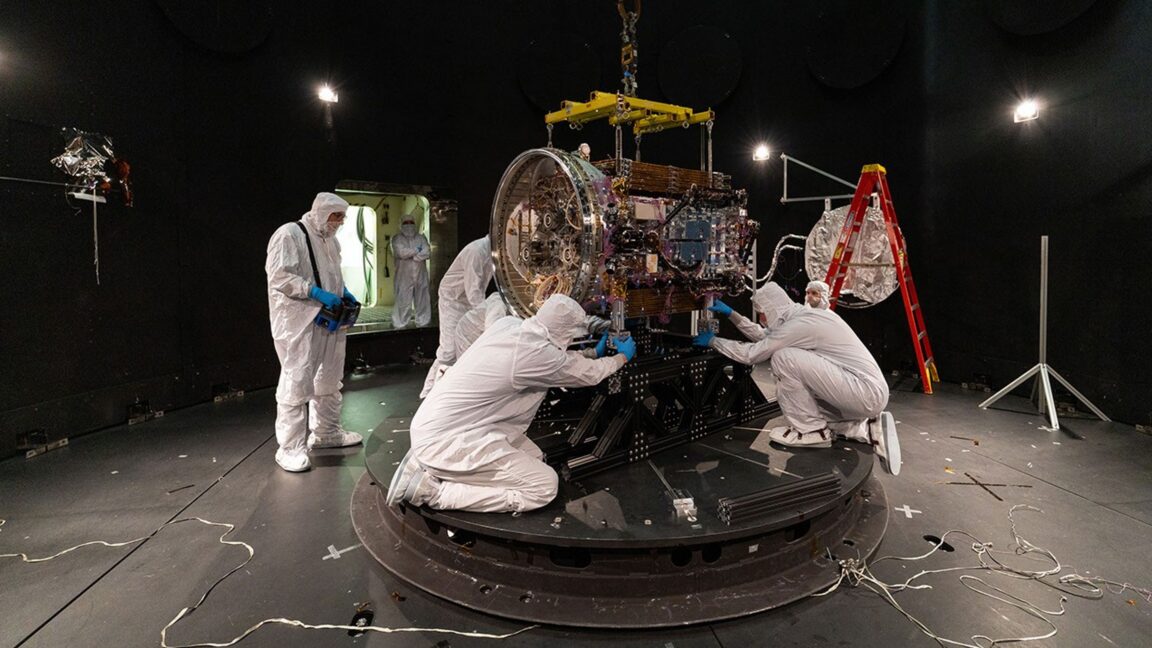
The rescue mission was developed by Katalyst Space Technologies, working under a $30 million contract awarded by NASA last September. NASA gave Katalyst nine months to build and launch a satellite to capture Swift flying some 200 miles above the Earth and boost it into a higher orbit.
Katalyst’s rescue spacecraft, known as Link, successfully launched July 3 and completed some of its initial checkouts before a malfunction caused it to spin out of control a few weeks later. NASA announced in August that Link would not be able to reach Swift as intended, and the rescue mission was aborted.
Still, designing and building a satellite, finding a rocket to launch it, and getting it to work in the harsh environment of space was a remarkable achievement. It would usually take several years to design, build, and test a satellite of Link’s size and complexity from scratch. Link weighed nearly a half-ton at launch, with electric thrusters, robotic arms, and large deployable solar arrays.
In the end, though, the Link satellite did not reach the Swift Observatory. The failure was bad news for scientists who rely on data from Swift, which has unique capabilities combining sensitivity to gamma rays, X-rays, and visible light with the agility to quickly turn toward astronomical targets. This has made Swift the go-to observatory for detecting gamma-ray bursts, the most powerful explosions in the Universe.
But Swift was going to fall out of orbit anyway. The spacecraft launched in 2004 and has far outlived its original design life. Swift does not have its own propulsion system, so it is unable to raise its orbit without help, leaving its fate at the mercy of aerodynamic drag in low-Earth orbit. Increased solar activity in recent years led to an increase in drag at Swift’s altitude, hastening its demise.


Leave a Reply